
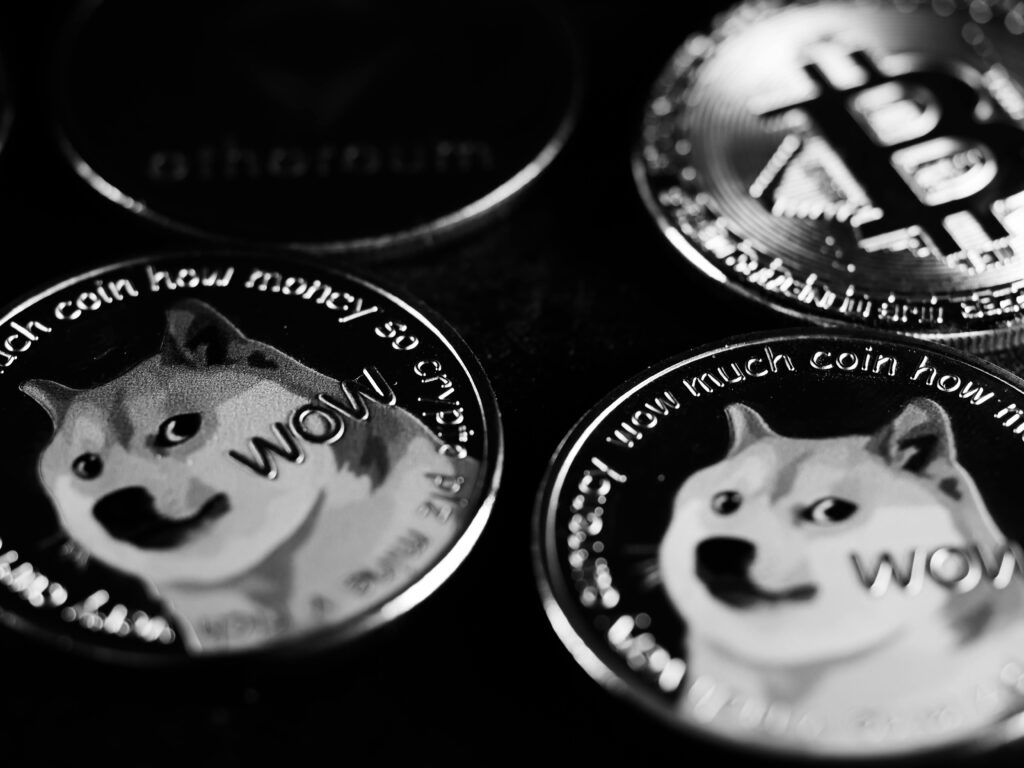
Dogecoin vs PEPE: Which Meme Coin Narrative Is Winning in 2026?
If you are comparing dogecoin vs pepe in 2026, you are really comparing two very different ideas wrapped in the same meme-first culture. Dogecoin is the original mainstream meme coin, but its official positioning goes beyond jokes: it presents itself as an open-source, peer-to-peer digital currency. PEPE, by contrast, is the archetype of a pure meme coin—built around internet culture, speculation, and attention, with no native utility story to lean on.
That difference matters more than many traders admit. In a market where narratives move faster than fundamentals, the strongest coin is not always the one with the cleverest meme. It is often the one with the clearest identity. And in a broad meme coins comparison, identity is what shapes community loyalty, exchange visibility, merchant interest, and long-term resilience.
Below, we break down the key battlegrounds: brand strength, community, utility, and risk profile. We will also touch on what the dogecoin price outlook looks like from a narrative perspective and how a practical pepe token analysis should frame expectations without hype.
Dogecoin vs PEPE: two narratives, two different missions
Dogecoin’s official message is unusually consistent for a crypto asset born from internet culture. It is described as an open-source peer-to-peer digital currency, and the project emphasizes that Dogecoin is meant to be used as money. The Dogecoin Foundation also presents itself as a nonprofit support and advocacy organization, adding a layer of governance and brand stewardship that most meme coins simply do not have.
PEPE, on the other hand, lives in the pure meme lane. Its value proposition is not utility, payments, or product adoption. It is attention, culture, and speculative participation in one of crypto’s most recognizable internet memes. In a market obsessed with narratives, that can still be powerful—but it also means the token is much more dependent on sentiment cycles than on actual usage.
Brand strength: why Dogecoin still feels like the blue-chip meme coin
Dogecoin’s brand has lasted through multiple market cycles
Dogecoin has something most meme coins never achieve: longevity. It survived the joke phase, became a cultural reference, then transformed into a recognizable crypto brand with real community infrastructure. The Dogecoin website and Foundation emphasize community, development, advocacy, and the idea that anyone with technical know-how can contribute. That creates a sense of permanence.
Brand strength in crypto is not just about name recognition. It is about trust, familiarity, and whether the asset feels “institutional enough” to be treated seriously even if it is playful at heart. Dogecoin benefits from being the original meme coin in the public imagination, and that first-mover advantage still matters in 2026.
PEPE’s brand is sharper, but narrower
PEPE has a highly recognizable meme identity and a strong internet-native aesthetic. That makes it ideal for rapid social virality. But its brand is also narrower: it is more dependent on meme cycles, community reposts, and speculative momentum. That can produce explosive upside in the right environment, but it also means the brand can cool quickly when attention shifts elsewhere.
In other words, Dogecoin feels like a household crypto name. PEPE feels like a trend that can become huge, fast, but is less likely to feel durable in the same way.
Community: the engine behind both coins
Crypto communities are not a side story; they are the product. That is especially true in meme coins. When comparing Dogecoin vs PEPE, community quality matters as much as community size.
Dogecoin community: older, broader, and more practical
Dogecoin’s community has long been associated with fun, generosity, and grassroots participation. The official site highlights friendliness, teaching, fundraising, and making memes, while the broader project ecosystem includes documentation, wallet guidance, and developer participation. This gives Dogecoin a community that is not just loud, but organized enough to support real-world use cases.
PEPE community: faster, louder, more speculative
PEPE communities tend to be highly reactive and social-media driven. That can be excellent for momentum trading because attention can snowball quickly. But speculative communities often have a shorter memory. They chase catalysts, listings, viral posts, and headline pumps. For a pure meme coin, that is not a weakness so much as the business model—but investors should recognize it for what it is.
Utility: the biggest dividing line in this meme coins comparison
Dogecoin has utility because money is utility
Dogecoin’s strongest fundamental argument is simple: it is designed to be used as currency. The official project messaging repeatedly frames Dogecoin as a peer-to-peer digital currency and notes that it is open-source and decentralized. That gives it a utility narrative that goes beyond meme status. If a coin can be sent, received, held, and used for payments, it has a basic form of utility even before you get into speculation.
Dogecoin also benefits from continuing ecosystem work from the Foundation, including support for development and infrastructure projects aimed at making integration easier for developers and merchants. That does not magically make Dogecoin a full-scale payments network, but it does mean the project has a direction beyond simply “number go up.”
PEPE is a pure meme coin by design
PEPE’s strength is not utility; it is simplicity. A pure meme coin strips away promises and keeps the thesis focused on community emotion, liquidity, and speculative demand. That can be effective, because fewer promises also means fewer expectations to disappoint. However, it is important to be honest about the tradeoff: when a coin has no intrinsic utility story, its valuation is almost entirely dependent on market appetite.
For readers doing a serious pepe token analysis, that should be the starting point. PEPE can be a strong trade, but it should be treated as a sentiment asset, not as infrastructure.
Risk profile: where the real difference shows up
If you want the shortest possible summary of Dogecoin vs PEPE risk, it is this:
- Dogecoin carries meme-coin volatility, but its brand and utility narrative make it comparatively more established.
- PEPE is more dependent on trend momentum and is therefore typically more vulnerable to rapid sentiment reversals.
Dogecoin’s risk is often that it becomes too widely known to surprise investors, not that it disappears overnight. PEPE’s risk is the opposite: it can outperform aggressively in bursts, but it can also retrace sharply when the meme cools. Both are speculative. Neither should be mistaken for a low-risk asset.
Liquidity and narrative depth matter
One reason Dogecoin tends to survive down cycles better than many rivals is that its narrative has depth. It can be framed as a joke, a payment coin, a community asset, or a cultural icon. PEPE has a much tighter narrative. That makes it easier to understand, but also easier to exhaust.
Dogecoin price outlook in 2026: what supports the thesis?
A realistic dogecoin price outlook in 2026 should avoid moonshot language and focus on what usually moves the asset: market-wide crypto risk appetite, retail speculation, social media momentum, and whether Dogecoin keeps its position as the best-known meme currency. Because Dogecoin is positioned as a currency rather than just a collectible joke, it has a more durable narrative base than newer meme coins.
Potential upside catalysts tend to be narrative-driven rather than product-driven. That is normal for Dogecoin. The key point is that Dogecoin does not need to invent a new identity every cycle. Its identity is already established.
What PEPE needs to keep winning attention
For PEPE to keep competing in 2026, it needs three things:
- Attention from social platforms and crypto communities.
- Liquidity so traders can enter and exit efficiently.
- Fresh narrative energy to stay relevant when meme rotations accelerate.
That means PEPE can thrive in bull phases where traders want high-beta meme exposure. But the same qualities that make it exciting also make it fragile. If the crowd rotates into a new meme, PEPE can lose mindshare quickly.
So, which narrative is winning?
If “winning” means lasting credibility, brand endurance, and a clearer story beyond speculation, Dogecoin is ahead. It has the strongest name recognition, the deepest legacy, and the most credible utility framing in the meme coin sector. The fact that the project explicitly describes itself as an open-source peer-to-peer digital currency gives it a different class of narrative than most meme coins.
If “winning” means pure speculative heat and meme purity, PEPE can absolutely dominate short-term attention. It is leaner, simpler, and easier to trade as a meme. But that is also why it carries a sharper risk profile. In a head-to-head Dogecoin vs PEPE matchup, Dogecoin is the more durable brand, while PEPE is the more concentrated meme bet.
Conclusion
The real lesson from this dogecoin vs pepe comparison is that these coins do not compete on the same terms. Dogecoin is the veteran with a currency-first identity, community depth, and a clearer support structure. PEPE is the pure meme expression of crypto speculation: fast, social, and highly dependent on crowd enthusiasm.
For readers who want the strongest long-term meme coin narrative, Dogecoin still looks like the safer flagship name. For traders who want a cleaner pure-meme thesis, PEPE offers that—but with much higher emotional and market risk. In 2026, the market may continue to reward both, but for different reasons. Dogecoin wins on durability. PEPE wins on intensity.
FAQ
Is Dogecoin better than PEPE?
Better depends on your goal. Dogecoin is stronger as a brand and has a utility narrative. PEPE is more of a pure speculation play.
Does PEPE have utility?
PEPE is generally viewed as a meme coin with no utility story at the core. Its value comes mainly from culture and market demand.
Why do people still buy Dogecoin?
Because it combines meme appeal with broader recognition, liquidity, and a currency-based identity that is easier to understand than many newer tokens.
Which is riskier: Dogecoin or PEPE?
PEPE is usually riskier because it depends more heavily on sentiment and meme momentum. Dogecoin is still volatile, but it has a more established profile.